Oriel alumnus’ campaign against river pollution turned into Channel 4 drama

Sir Walter Raleigh wrote the work while imprisoned in the Tower of London following his conviction for treason under James I
Hugh Mitchell (1957), an Engineering Science graduate, has donated a 1614 first edition of Sir Walter Raleigh’s History of the World to Oriel College.
In the library the folio accompanies a 1617 re-issue of Raleigh’s History that was donated by The Revd Alexander Pope — a former student at Oriel and grandfather of the famed English poet Alexander Pope.
Raleigh, before he was the renowned explorer, joined Oriel College as an undergraduate student in 1572, but left in 1574 without taking a degree.
He wrote the History while imprisoned in the Tower of London following his conviction for treason under James I.
He had planned for the work to comprise three volumes but only finished the first, his life cut short by execution. The volume begins with Genesis and ends with the second Macedonian war.
In 1615, James I objected to the Raleigh’s History as being “too sawcie in censuring Princes” and the first edition was ordered to be recalled, with many copies destroyed.
Mitchell’s donated folio is one of the “destroyed” first editions. The title page and frontispiece were torn out, though the former was later skilfully reinserted. Apart from the missing portrait of Raleigh, the folio is thought to be complete.
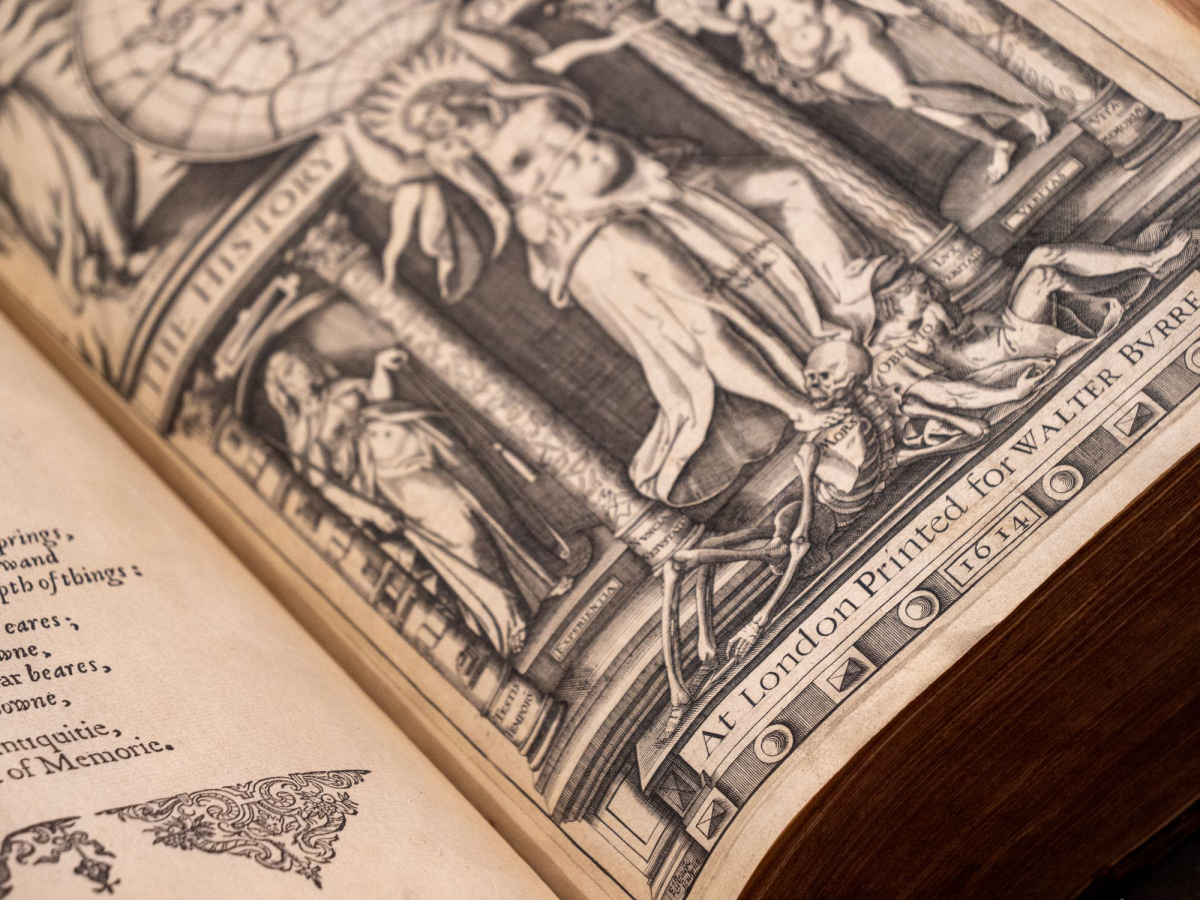
Only the 1614 edition of the History had Raleigh’s authorial oversight.
Raleigh was released from the Tower of London in 1616 by order of James I to lead an expedition to Guiana in South America. The expedition, though, was a disaster.
James I had specifically ordered Raleigh to avoid conflict with the Spanish, and the expedition breached those instructions.
During the expedition, Raleigh’s companion Lawrence Kemys led an attack on a Spanish outpost with Raleigh’s men.
The attack also resulted in the Raleigh’s son Walter being killed.
Upon his return to England in 1618, James I ordered that Raleigh’s previous treason sentence be carried out, and Raleigh was executed.
Dr David Maw, Oriel’s Fellow Librarian, said about Mitchell’s donation: “We are immensely grateful to Hugh Mitchell for his generous gift.
“It is fitting that the library should have a rare first edition of Raleigh’s History, and we look forward to integrating it into our collection of historic books in due course.”
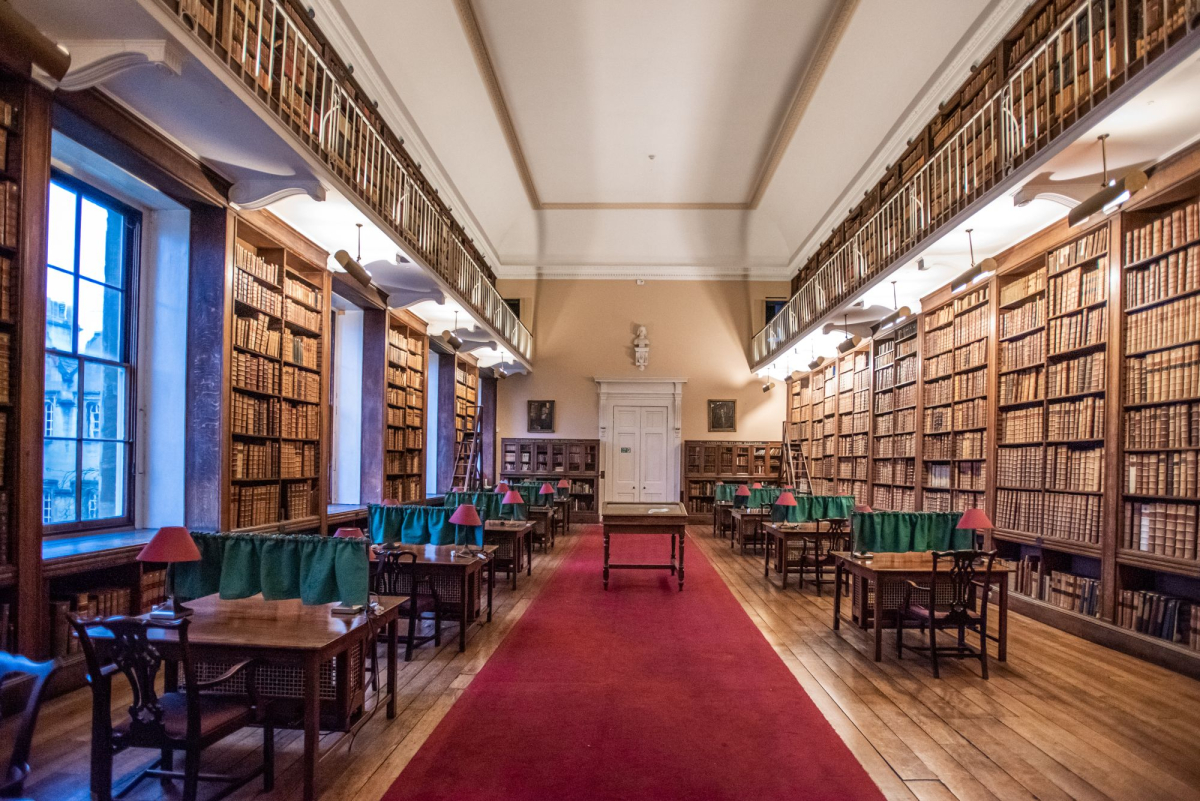
The folio is now a constituent part of Oriel’s Senior Library collection. Currently offsite, the collection of rare books was decanted to enable use of the library as a dining space during the renovation and upgrade to the kitchens and cellar bar.
The collection will return once restoration work of the Senior Library, set to begin in 2027, has been completed.
After reinstatement, the approximately 25,000 items of the collection will be fully catalogued. Online access will enable researchers from around the world to identify works of relevance to them.
The oldest books in the collection date from the decades following the invention of the printing press by Johannes Gutenberg in the 15th century.
The library’s oldest holdings, some of which were acquired within decades of the College’s foundation, are its medieval manuscripts. These 80 or so items are currently housed at the Bodleian Libraries.
Among Oriel’s most important and valuable archival items is the rare 1300 engrossment of Magna Carta.
It is suspected that the charter and the accompanying engrossment of the Forest Charter were originally issued to the University Church of St Mary the Virgin, where Oriel’s founder and first provost Adam de Brome was the rector.