Bavarian State Minister for Health meets Provost and Fellows

Mathematics graduate Peter Hammond’s (1968) campaign against untreated sewage being pumped into England and Wales waterways has been turned into a Channel 4 TV factual drama
Peter Hammond lives in a quiet Oxfordshire village and spends some afternoons enjoying the sunshine while looking out to the River Windrush from his garden.
He moved to the area in 2002 but eight years later noticed changes in the water quality and in turn the amount of wildlife around the Windrush.
“Over the years gradually the river got murkier,” he explained.
“When my neighbour Ash Smith moved in [in 2014] he could see that there were hardly any fish in the river when there had been when we [Peter and his wife] moved in.
“That’s how we started off, just worrying about the state of the river.”
In 2017, the duo founded Windrush Against Sewage Pollution (WASP). Almost a decade on, their endeavours have reached television screens.
Channel 4’s Dirty Business series includes their investigation into England’s water companies.
The factual dramatisation of the pair’s work has caught the attention of the public, with Hammond saying WASP has received thousands of emails and letters from viewers.
“People have become quite emotional and quite angry about what’s been happening,” said Hammond.
“What we’ve got to do is persuade them to not just send an email saying, ‘Well done, you’re doing a great job, keep going’. We want them to say, ‘And what can I do?’
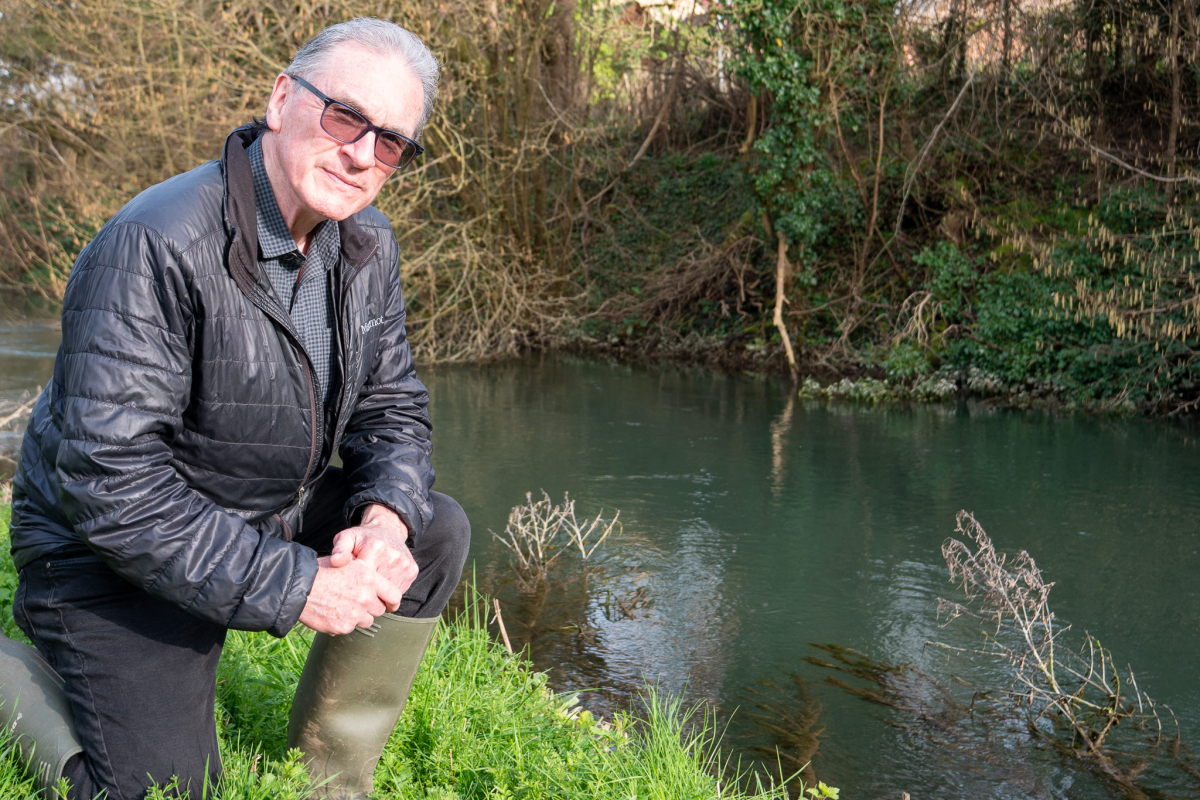
Hammond hopes the national profile of their work will help campaign efforts.
“If you can stop all this dumping of untreated sewage in rivers, or radically diminish it, I think it [the health of the rivers] can come back,” he said.
“But only if we make the changes that we need.”
According to Hammond, these changes include removing the profit motive from the water industry and bringing it under public ownership.
The law says that water companies must treat sewage effectually before it is returned to rivers and discharge untreated sewage only in exceptional circumstances. This has been weakened to permitting untreated sewage discharges if it is due to rainfall (or snowmelt) but not before treatment capacity is reached.
Hammond recently published a report showing that Thames Water discharged untreated sewage illegally over 8,000 times in the past five years.
Last year the government pledged to halve the number of times sewage is discharged by water companies.
It follows Thames Water receiving a record £122.7mn fine for breaching rules over sewage spills and shareholder payouts.
In a statement to the BBC, the company said it takes its responsibility towards the environment “extremely seriously”.
“Taking action to improve the health of our rivers is a key focus for us and that is why, over the next five years, we are delivering the most significant upgrade to the wastewater network in 150 years,” the firm said.
Thames Water added that it “believes in transparency” and was working “proactively and constructively” with community groups like WASP.