Bavarian State Minister for Health meets Provost and Fellows

Award-winning author and Oriel alumna Kate Herrity reflects on her year-long research project into prisons for her extensive studies on sensory criminology
Most people want to avoid going behind bars, but for Kate Herrity that was part of the intrigue.
“I’ve always been interested in prisons, partly because you’re not supposed to go in them,” said Herrity, who studied for a master’s in Criminology and Criminal Justice at Oriel College from 2014 to 2015.
“There’s something fascinating about a locked door to me.
“Whether it’s lack of mental health care provision, insufficient support for children who are struggling in school, houselessness, substance use issues, poverty, racism, prisons really sit at the nexus of pretty much every pressing socio-political issue.”
Her interest in prisons was sparked through an opportunity she couldn’t turn down.
“I was working in a library when a staff development programme invited people to express an interest in going to visit HMP Wandsworth Library,” Herrity explained.
“I’d never been in a prison before and I was completely overwhelmed by the soundscape.
“I just thought, what must that mean to people who can’t escape it, who have to live and work in this environment?”
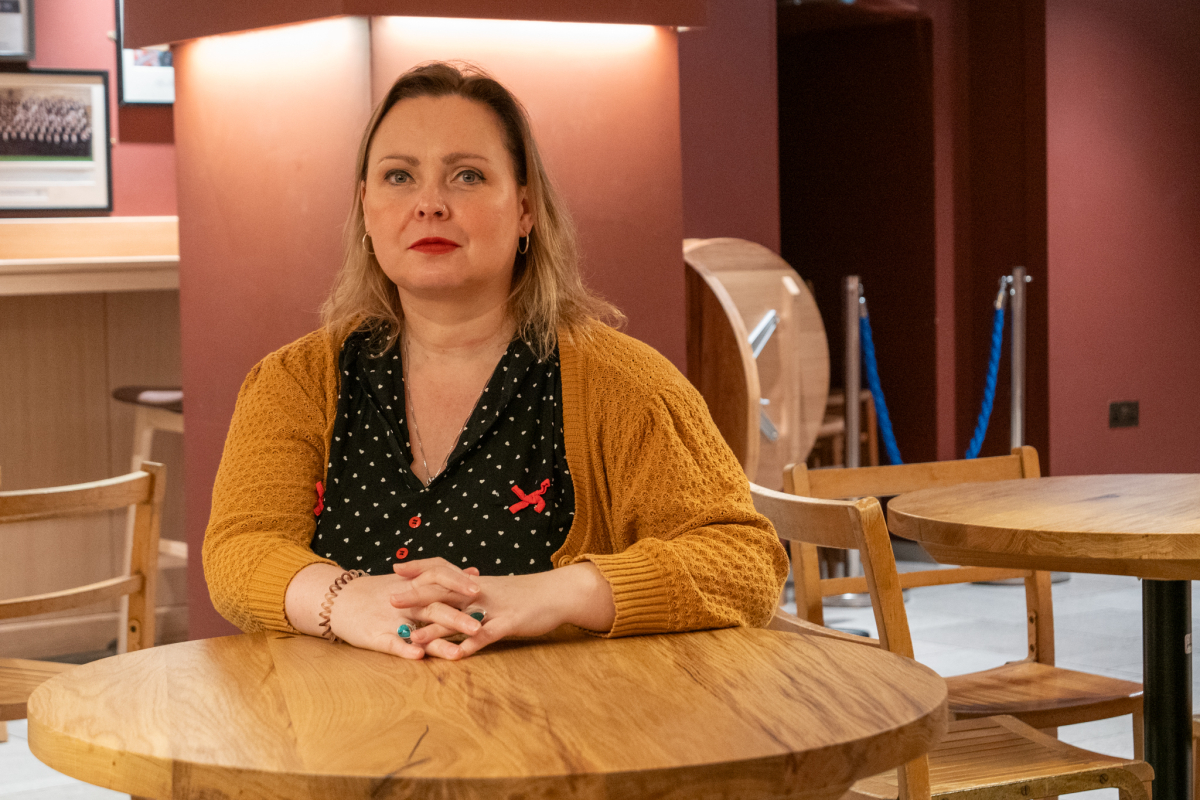
What followed was a process that lasted five years and led to the publication of her book Sound, Order and Survival in Prison. Herrity won the 2024 Criminology Book Prize for the publication.
“Being recognised by your peers is a big deal,” Herrity said.
“Knowing that those who have spent time in prison recognise your representation really matters.
“More than that though, the prize really signals that I managed to capture something of what those who spent time with me were generous enough to share.
“I felt like I might have done them justice, and that is enormously important.”
Herrity based her studies at a prison in the Midlands, somewhere she calls “HMP Midtown” in the book.
“I heard clanging, banging, jangling, keys, radios, huge numbers of feet.
“And of course, huge numbers of voices shouting out because they don’t have enough time out of cell to just go to speak to the person they want to speak to.
“There’s usually somebody on a wing or a unit who is in a state of profound mental distress, so cries of distress will often go on day and night. You can’t really escape that.”
Alongside the vocal disruptions, other noises added to the rhythms of the prison.
“Banging on doors is a major form of communication,” said Herrity.
“Sometimes it’s celebratory, so if there’s a sporting event or New Year’s Eve.
“More often it’s distress, irritation or anger. If you get a whole wing of people slowly, rhythmically banging on their door. That’s designed to let staff know that they’re very unhappy.
“It’s basically a cacophony and it takes a while to train your ear to understand the specificities of the day.
“The specifics of a day in terms of the sound will tell you whether it’s a good day or a bad day. Or if violence is coming, you can hear that.
“Everything is imposed by a very stark, metallic design that maximizes reverberation, echo, discomfort. You feel it as well as hear it.”
As part of the year-long study of the prison’s soundscape, Herrity took it upon herself to spend a night behind bars.
“I thought it was really important to get a sense of the space over different times,” she recalled.
“What does it feel like when night falls? When people start going to sleep? When not everybody does sleep?
“I felt really, really lonely and time just stretched out before me because I knew I wasn’t going to get off the wing until after the morning.
“And it’s when all the cockroaches and the mice come out. It was the nearest I came to feeling what it would have been like to be stuck behind the door.”
Immersing herself into the prison environment left the aspiring researcher with key takeaways for how a rowdy prison could be calmed.
“Carpet. Cheap carpet would make a massive difference because it dampens sound,” Herrity said.
She also suggested reducing staff radio use and minimising the use of security alarms.
“There are people in prison who haven’t been able to have a good night’s sleep since they arrived because of all the banging and clattering and screaming and shouting,” she explained.
“Even just the provision of decent earplugs can be life-changing for somebody.”
Herrity hopes her studies will lead to positive changes for prisoners and prison staff alike.
“All manner of vulnerable groups, neurodivergent people, autistic people, people with ADHD, people with mental health problems are all so hugely overrepresented in our prison population,” she said.
“Veterans are overrepresented in our prison population and among our prison staff.
“When you expose people to sounds that are reminiscent of warfare or violence when they have been traumatised by exposure to those things, you are re-traumatising those people.”
Herrity has published two further books this year about criminology, sounds and the sensory. The impact of the year she spent at Oriel College remains.
“Oriel was really good to me,” said Herrity.
“What I found was an incredibly warm, welcoming collection of people who had a stronger sense of community than I could possibly have anticipated.
“That taught me a huge amount about what it means to be part of a community.
“I feel a sense of connection that has drastically outlived the time I spent there, and I anticipate having forever.”